
Slab Leak Detection in Marietta & Metro Atlanta
A slab leak happens when a water line running beneath your home’s concrete foundation develops a crack or break. Because the pipe is embedded in or under the slab, the leak isn’t visible the way a leak under a sink or behind a washing machine would be — which means it can run for a long time before it’s discovered, and it often needs a different diagnostic approach than other plumbing leaks.
- Same-day in most cases
- No jackhammering to find it
- Written report
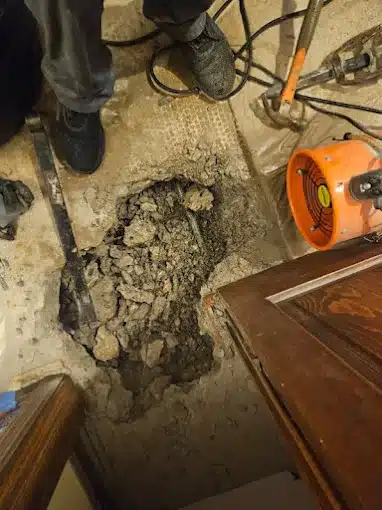
Signs You Have a Slab Leak
- A section of flooring feels unusually warm (often a sign of a leaking hot water line)
- Flooring feels damp, or you notice moisture coming up through carpet or tile
- You hear the sound of running water when nothing is turned on
- Your water bill has risen without explanation
- Your water meter continues to move with everything off
- Cracks appear in flooring or walls near the foundation
- A musty smell or visible mold develops near the floor
A slab leak is a water leak in a pipe located beneath or within a building’s concrete foundation. Slab leak detection uses diagnostic testing to locate the suspected failure before unnecessary concrete or flooring is opened.
How We Detect Slab Leaks
Slab leaks require testing methods built for a pipe you can’t see or easily access. We typically start with pressure testing to confirm a leak is present in the line, then use acoustic detection equipment to listen through the slab for the specific sound signature of water escaping under pressure — sound that can travel through concrete and structure, so pinpointing it takes experience and the right equipment. Thermal imaging can also help identify temperature variations on the floor surface caused by a leaking hot water line, and isolation testing helps determine which section of plumbing is responsible before any location work begins.
The objective is to narrow the leak down to as small an area as possible before any concrete is opened, so that if access is needed, it’s targeted rather than exploratory.
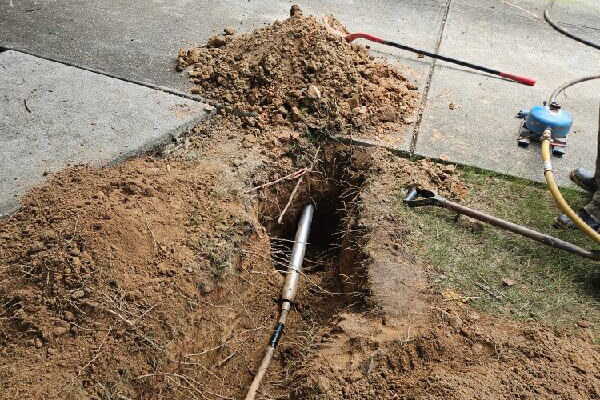
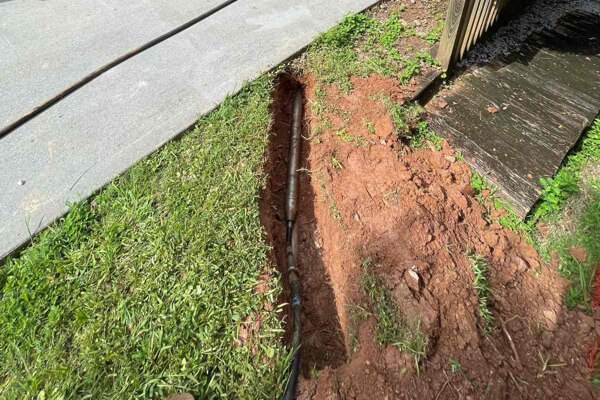
Why It Matters
Why Slab Leaks Shouldn't Wait
A slab leak that goes unaddressed can lead to foundation issues over time, in addition to the ongoing water loss and utility cost. It’s not usually an emergency in the way a burst pipe is, but it’s also not something that improves by waiting — the leak doesn’t fix itself, and the underlying moisture exposure only continues.
Next Steps
What Happens After the Leak is Located
Once we’ve identified the leak’s approximate location, we’ll walk you through what was found. Depending on the situation, repair options can range from accessing and repairing the specific section of pipe to rerouting the line above the slab instead of repairing it in place. We’ll make sure you understand what was found and what your options are before any repair decision is made.
Same-day Availability
Same-day inspections are often available depending on scheduling, and 24-hour emergency service is available for situations that can’t wait.
If your situation runs deeper
If your situation turns out to involve a broader plumbing issue, we also handle Water Leak Detection, Underground Water Leak Detection, and Commercial Leak Detection for larger properties.
Get it Located Today
Tell us what you are seeing and we will call you back.
Or call (470) 454-5051 — 24-hour emergency line.
Slab Leak FAQs
How do you find a leak under a concrete slab?
We use a combination of pressure testing, acoustic detection, and sometimes thermal imaging to narrow down a slab leak’s approximate location before any concrete needs to be opened.
Do you have to break concrete to find a slab leak?
Not necessarily. Locating a slab leak and accessing the pipe are two different stages. Professional diagnostic testing is used to narrow down the suspected leak location before concrete or flooring is opened, helping reduce unnecessary demolition.
Is a slab leak an emergency?
It’s not usually an active emergency the way a burst pipe is, but it should be addressed promptly. The leak won’t resolve on its own, and continued moisture under the slab can lead to additional issues over time.
Does a warm spot on the floor mean I have a slab leak?
A warm area on the floor can be associated with a leaking hot-water line beneath a slab, but a warm spot alone does not prove that a slab leak is present. Diagnostic testing is needed to determine whether a plumbing leak exists and where it is located.
What causes slab leaks?
Common causes include pipe corrosion over time, ground shifting, poor original installation, and abrasion between a pipe and the surrounding concrete or gravel. Copper pipes in particular can be prone to this over many years.