
Underground Water Leak Detection in Metro Atlanta
Underground water leaks happen in the buried lines that run between the water meter and the house, or across a larger property between buildings. Because these lines are out of sight, a leak can run for weeks or months before it becomes visible — often first as a wet or unusually green patch of yard, a jump in the water bill, or a drop in pressure that doesn’t have an obvious cause.
- Licensed & Fully Insured
- 24-Hour Emergency Services
- 20+ Techs & Managers
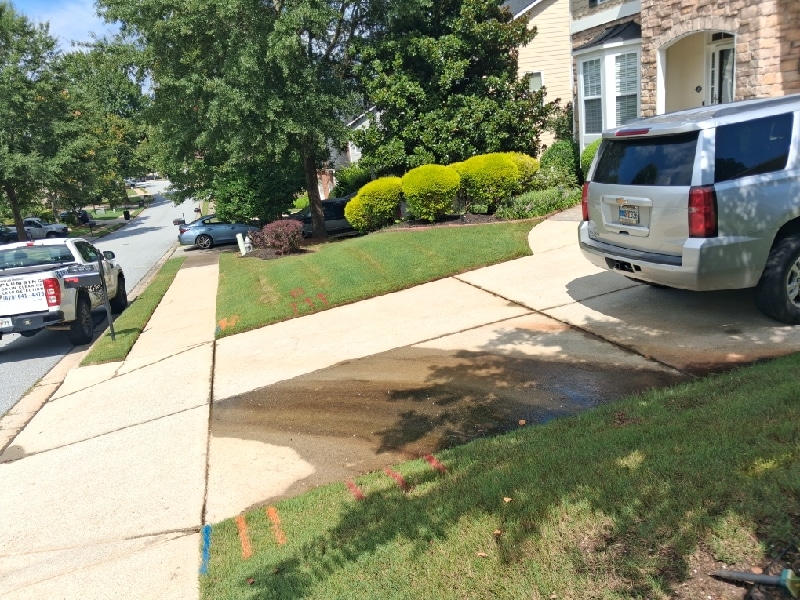
Signs of an Underground Water Leak
- A wet, soggy, or unusually soft area of yard, especially when it hasn't rained
- A patch of grass that's noticeably greener or lusher than the surrounding lawn
- A sudden or gradual drop in water pressure throughout the property
- A rising water bill with no change in usage habits
- Your water meter continues to run with everything inside the property turned off
- The sound of running water near a water line path, even underground
Underground water leak detection is the process of locating leaks in buried water lines using diagnostic testing before unnecessary excavation begins.
How We Locate Underground Leaks
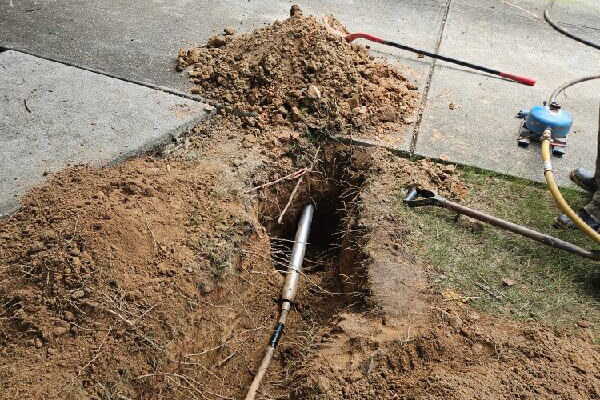
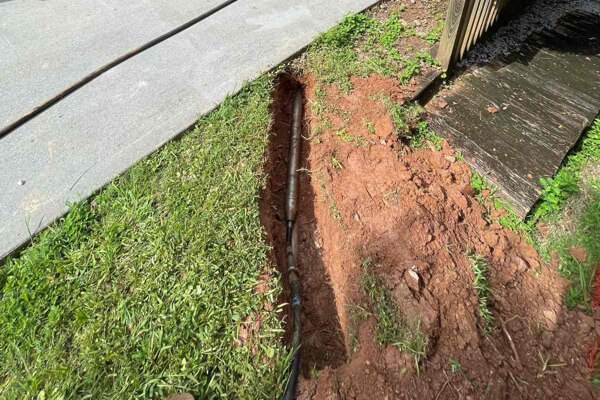
Digging up a yard line to search for a leak is expensive, disruptive, and often unnecessary. We use pinpointing methods designed to narrow down the leak’s location before any digging happens. Pressure testing and isolation testing confirm that a leak exists in the underground portion of the system rather than inside the home. Acoustic detection equipment listens for the specific sound of pressurized water escaping underground — a sound that carries differently through soil, rock, and pipe material, which is why experience with the equipment matters. Tracer gas testing can also be used in some situations to pinpoint a leak’s exact location along a buried line.
Once we’ve narrowed the leak down to a specific section, any digging that follows is targeted to that area rather than an exploratory trench across the yard.
Larger Properties
Underground Leaks on Larger Properties
Commercial and multifamily properties often have longer runs of underground line, sometimes serving multiple buildings from a single main connection. A leak in one of these lines can be harder to notice — since no single unit may show an obvious symptom — but can also represent significant ongoing water loss. We work with property managers and facility teams to trace these leaks across larger underground systems.
Next Steps
What Happens Next
Same-day Availability
Related Services
We also specialize in Water Leak Detection, Slab Leak Detection, and Commercial Leak Detection for businesses and larger properties.
Need an Underground Leak Located?
Don’t dig up your yard looking for the source. We’ll help pinpoint the leak so you know where the problem is before excavation begins.
Or call (470) 454-5051 — 24-hour emergency line.
Underground Leak Detection FAQs
Can an underground water leak increase my water bill?
Yes, often significantly. An underground leak can run continuously for weeks or months before any above-ground symptom appears, during which the water is still being metered and billed.
What causes wet spots in my yard when it hasn't rained?
An unexplained wet or soft patch of lawn — particularly one that stays wet regardless of weather — is one of the most common signs of a broken or leaking underground water line beneath that area.
Will you need to dig up my whole yard to find the leak?
No. Our diagnostic process is built to narrow the leak down to a specific area before any digging starts, so excavation — if it’s needed at all to complete a repair — is limited to that section.
How is an underground leak different from a slab leak?
An underground leak occurs in a buried line outside the home’s foundation, such as the line running from the meter to the house or across a yard between buildings. A slab leak occurs in a line beneath the home’s concrete foundation itself. Both require specialized, non-invasive diagnostic methods, but the specific approach and equipment used can differ.
Is an underground leak an emergency?
It depends on the size of the leak and how much pressure or water loss is involved. A slow leak may not be urgent, but a significant pressure drop or visible pooling water can indicate a larger break that should be addressed quickly.