
Sewer & Drain Leak Detection in Marietta & Metro Atlanta
A sewer or drain line leak happens in the pipes that carry wastewater away from your home — underground lines connecting to the city sewer or a septic system, or the drain lines running behind walls and under floors. Unlike a pressurized water-supply leak, these lines only carry water when a fixture is used, which makes them behave differently and often requires a different detection approach.
- Same-day in most cases
- No jackhammering to find it
- Written report
Signs You Have a Sewer & Drain Leak
- A persistent sewage odor inside or outside the home, especially near a specific wall, floor, or yard area
- Slow-draining or gurgling fixtures throughout the house, not just one drain
- Wet or unusually lush, green patches in the yard along the path of the sewer line
- Sinkholes, soft spots, or settling in the yard, especially near the sewer line's path
- Water backing up into a tub, shower, or floor drain when another fixture is used
- Mold, mildew, or water staining on walls or ceilings below a bathroom or kitchen
- Foundation cracks or shifting near an interior drain line
How We Detect Sewer & Drain Leaks
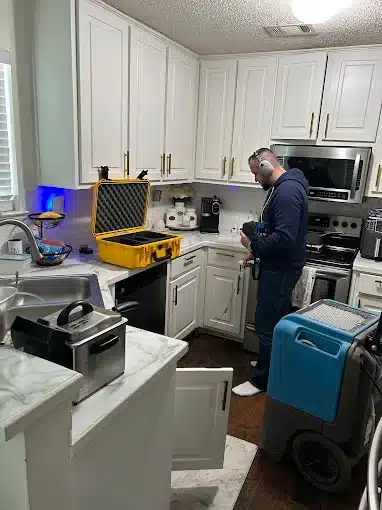
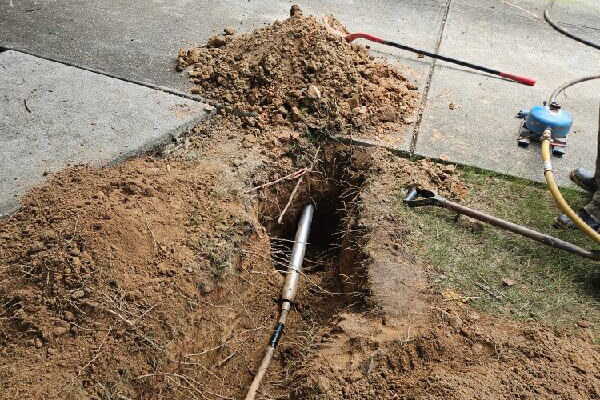
Sewer and drain lines are gravity-fed rather than pressurized, so the acoustic and pressure-testing methods used on a water-supply line don’t apply the same way here. Video sewer camera inspection is the primary method — a waterproof camera is fed directly into the line, giving a real-time, recorded look at cracks, breaks, offset joints, root intrusion, or bellied (sagging) sections from the inside. A locating transmitter (sonde) built into the camera head lets us mark the exact depth and above-ground location of any problem area from the surface, so if excavation is needed, it’s targeted to a marked spot rather than a guess. Where useful, dye testing — flushing a colored, water-safe dye and watching where it resurfaces — helps confirm a suspected leak path, and hydrostatic (water) testing can help isolate whether a leak is present in the line before camera work begins. The objective is the same as with any other leak: know exactly what’s wrong and exactly where before anyone opens a wall, floor, or yard.
Why It Matters
Why Sewer & Drain Leaks Shouldn't Wait
A sewer or drain line leak isn’t just a water-loss issue — it introduces wastewater into the soil, under a slab, or behind a wall, which raises both a sanitation concern and a structural one over time. Root intrusion and pipe deterioration tend to get worse, not better, and a small crack or offset joint that’s manageable today can become a full collapse or backup later. It’s rarely an active emergency in the way a burst supply line is, but it also isn’t something to leave unaddressed once the signs show up.
Next Steps
What Happens After the Leak is Located
Once camera inspection and any supporting testing have identified the problem area, we’ll walk you through exactly what was found — including the recorded video where applicable — and what the repair options look like. Depending on the issue, that can range from a localized spot repair to trenchless pipe lining or full replacement of a section. We’ll make sure you understand what was found and what your options are before any repair decision is made.
Same-day Availability
Same-day inspections are often available depending on scheduling, and 24-hour emergency service is available for situations that can’t wait.
If your situation runs deeper
If your situation turns out to involve a broader plumbing issue, we also handle Water Leak Detection, Underground Water Leak Detection, and Commercial Leak Detection for larger properties.
Get it Located Today
Tell us what you are seeing and we will call you back.
Or call (470) 454-5051 — 24-hour emergency line.
Sewer & Drain Leak FAQs
How do you find a sewer line leak without digging up the yard?
A sewer camera is fed directly into the line to see the problem from the inside, and a built-in locating transmitter marks its exact position from the surface. This lets us confirm the leak and pinpoint its location before deciding whether any digging is actually needed.
What causes a sewer or drain line to leak?
The most common causes are tree root intrusion at pipe joints, pipe corrosion or deterioration with age, cracked or offset joints from ground shifting, and bellied (sagging) sections of pipe that trap waste and eventually fail. Older clay and cast-iron sewer lines are especially prone to root intrusion and corrosion.
Can a sewer camera inspection find a leak, or just blockages?
Do you have to dig up my whole sewer line to fix a leak?
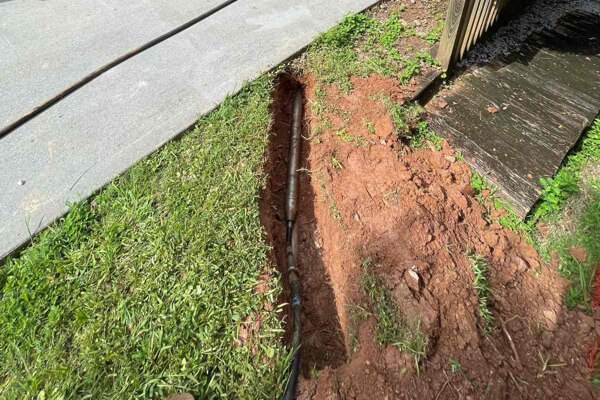
Not necessarily. Camera inspection identifies the specific location and type of damage first, which is what determines the repair scope. Some leaks are addressed with a localized repair or trenchless lining; others require a longer section to be replaced. That decision comes after the diagnosis, not before.
Is a sewer or drain leak an emergency?
Active sewage backup into the home is an emergency and should be treated as one. A slow leak in an underground sewer line without backup symptoms is not usually an active emergency, but it should still be diagnosed and addressed promptly, since root intrusion and pipe deterioration typically get worse over time.
How is a drain leak different from a sewer line leak?
A drain leak occurs in the interior pipes — usually behind a wall or under a floor — that carry water from a specific fixture like a sink, tub, or toilet to the main line. A sewer line leak occurs in the larger underground line that carries wastewater from the house to the municipal sewer or septic system. Both are diagnosed with camera inspection, but drain leaks are typically confirmed with dye testing since the affected run is much shorter.